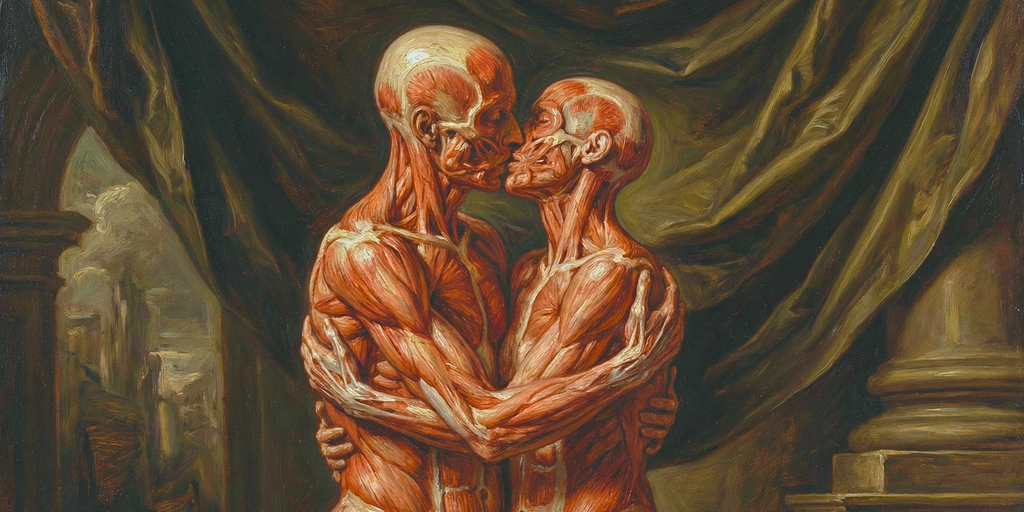
Human relationships are neither purely emotional nor purely social constructs. They are biological processes shaped by evolution, continuously rewritten by the environment. What we are witnessing today is not the “death of relationships” but a mismatch between ancient bonding biology and a radically altered modern ecosystem. Our difficulty in sustaining relationships is not moral failure alone; it is a nature–nurture feedback loop where environment is actively reshaping biology.
At the core of human bonding lies a multi-system biological architecture. Relationships do not emerge from a single hormone or instinct. They are built through an interaction of reward, attachment, stress regulation, and emotional control. Dopamine drives pursuit, curiosity, and desire. It pushes humans towards novelty and anticipation, making attraction and early-stage bonding possible. Oxytocin, on the other hand, stabilises relationships. It fosters trust, familiarity, emotional safety, and long-term attachment. Vasopressin supports commitment and territorial bonding, while serotonin helps regulate mood and emotional steadiness. Cortisol, the stress hormone, plays a double role — facilitating bonding under shared hardship, but destroying trust when chronically elevated.
In evolutionary terms, this system was effective because the environment was relatively slow. Social circles were small, choices were limited, and bonds were reinforced through repeated physical presence. Dopamine initiated bonds, but oxytocin sustained them. Emotional neutrality and predictability were not seen as boredom; they were signals of safety.
The modern environment has disrupted this balance.
The internet, social media, dating apps, and constant digital stimulation have chronically overstimulated dopamine pathways. The brain has adapted by raising its reward threshold. As a result, normal emotional states now feel dull, and stable relationships are misinterpreted as lacking passion. People are no longer dissatisfied because relationships are empty; they are dissatisfied because their nervous systems are overstimulated and because many were conditioned early to equate love with reward rather than safety. They expect dopamine highs from oxytocin-based bonds, a biological impossibility.
Experimental work on reward and stress shows that organisms under threat do not seek what is healthy, but what is familiar. In laboratory settings, rats trained to press a lever for dopamine-inducing rewards would compulsively press the lever when exposed to stress or fear cues, even when the behaviour became harmful. The action no longer produced pleasure; it produced temporary relief. Human behaviour under relational stress mirrors this mechanism. When modern individuals experience loneliness, uncertainty, or emotional overload, the nervous system shifts into threat mode and suppresses exploration. In that state, the brain reaches backwards, not forward, returning to past attachments that once regulated distress. Going back to an ex is, therefore, less an act of desire and more a stress-driven regression toward familiarity, where dopamine-linked relief overrides long-term well-being.
This has created a dangerous psychological illusion: the belief that love must feel exciting at all times. Relationship biology is also shaped early in life. Individuals conditioned from childhood to associate love with performance, where affection is given only when they achieve, comply, or succeed, internalise a dopamine-based model of attachment. Love becomes contingent, earned, and stimulating rather than stable and regulating. As adults, such individuals often find oxytocin-based relationships, characterised by emotional safety, predictability, and calm presence, strangely empty or meaningless. What feels like boredom is not the absence of love, but the absence of dopamine spikes. Having learned that connection arrives through reward and withdrawal, they struggle to recognise unconditional bonding as real intimacy. As a result, they unconsciously recreate high-reward, high-uncertainty dynamics, mistaking emotional volatility for passion.
I will certainly blame Bollywood here as well. These jokers have romanticised love to an unhealthy extent. For a country like India, this is not just entertainment; it becomes mass conditioning. From a biological standpoint, constant excitement is not love; it is addiction(expecting constant happiness is a pathological expectation). Long-term bonding is calm, repetitive, sometimes emotionally flat, and deeply regulating. When dopamine-driven expectations dominate, people abandon relationships not because they are unhealthy, but because they no longer stimulate.
Biology does not exist in isolation from the environment. The gut–brain axis is a clear example of this interaction. Modern diets high in ultra-processed foods, combined with antibiotics, sedentary lifestyles, C-section delivery and sleep disruption, have reduced microbial diversity in many populations. This does not mean that “bonding bacteria” have disappeared, but it does mean that baseline emotional regulation has weakened. Gut health influences inflammation, stress sensitivity, and neurotransmitter balance. Increased inflammation and anxiety reduce patience, empathy, and tolerance for relational friction. The result is not the absence of love, but the inability to sustain it under stress.
This is where nature and nurture become inseparable. The environment is no longer merely influencing behaviour; it is writing itself into biology. Chronic stress alters hormone baselines. Sleep deprivation reshapes emotional processing. Digital overstimulation rewires reward circuits. Diet affects mood stability. Together, these changes create individuals who are more reactive, more anxious, less emotionally available, and quicker to disengage.
Relationships have not failed because humans are incapable of bonding. They have failed because the environment now selects against the traits required for long-term attachment — patience, emotional tolerance, and delayed gratification. Biology is adapting, but adaptation is not always beneficial in the short term.
It is important to be clear: this is not an excuse. Biology explains vulnerability, not irresponsibility. While the environment has reshaped our nervous systems, it has not removed agency. Understanding these mechanisms should lead to better self-regulation, not surrender. Relationships today require conscious effort precisely because the environment no longer supports them naturally.
In essence, modern relationship instability is not a collapse of love, but a biological misalignment. Ancient bonding systems are operating inside a hyper-stimulated world that rewards novelty over depth. Until environment and biology are brought back into balance, through lifestyle, attention control, emotional literacy, and realistic expectations, relationships will continue to feel fragile.
The problem is not that humans have changed beyond repair. The problem is that biology evolved for a world that no longer exists, and we have not yet learned how to live consciously within this new one.