Jats and Gujjars Aren’t Part of the Vedic Varna System: How the Modern Caste Narrative Became One of India’s Biggest Scams
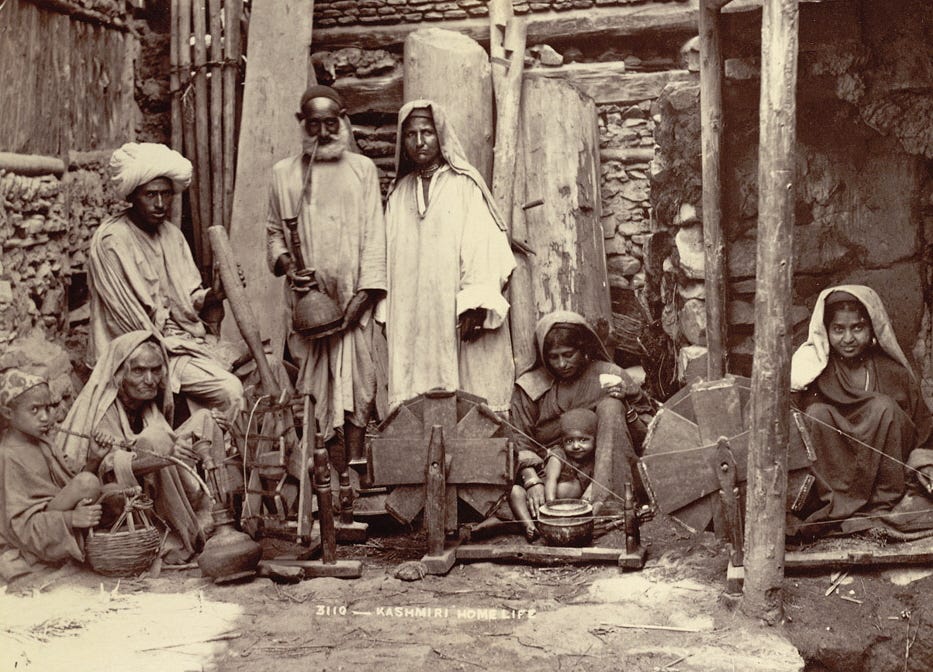
Contemporary discussions of caste in India often begin from a flawed premise: that the varna system was a universal and comprehensive framework meant to classify all communities living in the subcontinent. This assumption collapses under basic historical scrutiny. Communities such as Gujjar and Jats are frequently forced into the varna framework despite the fact that their historical modes of life were tribal, semi-nomadic, militarised, and regionally mobile. Varna vyavastha was an abstraction derived from settled, surplus-based social formations, while many such groups operated outside that ecological and economic structure. The mismatch is structural, not moral. Expecting tribal or frontier communities to conform to varna logic is equivalent to applying urban administrative categories to pastoral societies. The problem lies not with the communities, but with the anachronistic lens used to interpret them.
The Indian subcontinent was never a single society operating under one social logic. It was a vast and internally diverse civilisational space shaped by geography, ecology, migration, and political fragmentation. Riverine agrarian zones, forested regions, arid pastoral belts, hill societies, and urban centres produced fundamentally different forms of social organisation. Social life was governed locally, not pan-Indianly. Any theory that assumes a uniform caste system functioning identically across time and space is historically unsound. Unity at the civilisational level did not imply uniformity in social practice.
Early Vedic literature, particularly the Rig Veda, reflects the worldview of a specific elite social formation rather than a comprehensive description of Indian society. Varna emerged as a functional abstraction that conceptualised the roles necessary for stability in a settled society with land ownership, economic surplus, and political hierarchy. It was not an ethnographic survey, nor was it an attempt to categorise all populations encountered by Vedic-speaking elites. Varna described functions, not people. It outlined a theoretical model of interdependence rather than a rigid system of birth-based segregation. Crucially, this framework was legible only within societies that met its underlying assumptions. Where those assumptions did not exist — such as in tribal and semi-nomadic societies — the model simply did not apply.
These groups were characterised by role fluidity rather than role segregation. Economic, military, and social functions often overlapped within the same individuals or clans; kinship, ecology, and mobility determined social organisation more than ritual hierarchy. To include these societies within a fourfold functional model designed for sedentary agrarian elites would have been analytically incoherent. Their exclusion from varna was therefore not necessarily an act of hierarchical degradation, but a recognition that the model was not meant to describe them at all.
For the overwhelming majority of people across Indian history, daily life was governed not by Sanskritic theory but by jati, clan, biradari, and village custom. Social regulation occurred through local councils and kinship networks. Status within these systems was negotiated locally and often shifted with changes in land control, political patronage, and military power. Scriptural ideals had limited influence outside elite contexts. Varna remained an abstract intellectual framework, while jati constituted lived social reality.
The widespread presence of shared gotras and surnames across different castes points to deep population continuity rather than rigid social separation from the outset. These shared markers suggest older tribal or clan substrates and symbolic claims of common ancestry. However, gotra functions as a claimed lineage, not a genetic archive. Over centuries, processes such as endogamy, political differentiation, and land-based stratification produced distinct social identities even among groups with shared origins. Historical continuity does not preclude social divergence. This regional differentiation is evident even within caste labels treated today as uniform; a Gujjar in Kashmir and a Gujjar in western Uttar Pradesh may share a distant ancestral layer, but their political histories and cultural practices differ substantially. Now, Caste labels operate as broad umbrellas covering multiple regional trajectories rather than as indicators of a single frozen tribal identity.
A useful comparison can be found in the idea of the “36 biradaris,” a concept historically familiar in regions such as Western UP, Haryana, Punjab, and Rajasthan. The phrase does not literally mean exactly thirty-six castes but functions as a social shorthand for the major communities that have long co-existed in local society. The term comes from biradari, a Persian-derived word meaning brotherhood or clan. In practice, it refers to extended kinship networks that manage marriage alliances and dispute resolution. The biradari system does not represent a hierarchy of moral worth anchored in scripture but an empirically evolved network of interdependent communities whose positions are negotiated through land relations and power. Just as politicians today appeal to the “36 biradaris” to signal inclusive representation, this reflects how everyday society depended on negotiated group interactions rather than rigid, pan-Indian hierarchies.
A useful way to understand early varna is to compare it with Plato’s division of society into rulers, guardians, and producers in The Republic. Plato was not conducting a census of Athens, nor was he assigning immutable identities to birth groups. He was constructing a philosophical abstraction that described the functions necessary for a stable polis. The model was normative and theoretical, not ethnographic. Varna operates in a similar register. Reading varna as a universal social blueprint commits the same error as treating Plato’s class schema as a demographic record. This comparison clarifies why tribal and semi-nomadic societies could not be meaningfully incorporated into varna logic: societies organised around mobility and seasonal role rotation could not be translated into role-segregated abstractions without distortion.
The rigidification of caste did not emerge from the varna theory alone. A decisive transformation occurred under colonial rule, particularly through the imposition of British census logic. Colonial administration demanded that every individual be placed into a single, fixed, and enumerable category. This bureaucratic requirement was fundamentally incompatible with Indian social reality, which accommodated layered identities and contextual role shifts. A community might farm during one season, serve as soldiers during another, and perform ritual functions alongside both. Census classification erased this fluidity by forcing one occupation and one caste label to stand in for an entire social life.
Once recorded, these labels acquired an authority they had not previously possessed. Administrative repetition converted provisional descriptions into permanent identities. Over time, what had once been negotiable and situational hardened into hereditary and exclusionary categories. The census did not merely document caste; it reorganised how Indians understood themselves. Role-fluid societies were rendered legible to the colonial state only by being stripped of their flexibility. Ignoring this distinction collapses philosophy, practice, and bureaucracy into a single myth of timeless oppression.
However, a major reason modern Indians continue to misunderstand caste, gotra, and community history is that we now interpret Indian social life through conceptual frameworks that are not indigenous to how Indian societies organised themselves. Two forces are responsible for this distortion: Abrahamic theological assumptions and colonial administrative logic. Together, they reshaped how Indians think about identity, pushing society toward rigid, singular categories.
Abrahamic traditions are built on a fundamentally different relationship between text and authority. In Christianity and Islam, scripture functions as command; the text is revealed law, and authority flows top-down. When modern Indians unconsciously adopt this framework, they expect Indian texts to function the same way. The Vedas and Dharmashastras are read as rulebooks or commandments. This is a category error. In Indian traditions, the Vedas are Shruti — that which is heard. They are records of observation, memory, and reflection, describing how people lived and what sustained order. They do not issue universal commands meant to govern all people across all eras. Righteousness in the Vedic worldview was observed in nature and social balance, not created by text.
Once this Abrahamic lens is applied, Hinduism itself is reimagined as a single, uniform religion comparable to Christianity or Islam. Historically, Hinduism functioned as a civilisational umbrella that absorbed diverse practices — local deities, folk rituals, ancestor worship, and nature-based traditions — that often contradicted one another. It did not demand uniform belief. But under the Abrahamic comparison, diversity looks like inconsistency. Varna is mistaken for a divinely mandated hierarchy rather than a theoretical abstraction, and jati is assumed to be eternally fixed.
Caste-based hierarchy and discrimination did exist in India, but they operated unevenly across regions and periods. Social dominance was shaped less by textual purity and more by control over land, labour, weapons, and political authority. In some regions, groups classified today as lower castes held economic or military dominance. In others, tribal polities ruled over Brahmin elites. In still others, occupational groups maintained autonomy and social respect. Oppression followed power relations, not scripture alone. So, blaming the Vedas or the Manusmriti or even Brahmins, for that matter, is lazy politics.
At this point, another modern distortion needs to be addressed: the claim that only Brahmins can read, teach, or interpret the Vedas. This idea misunderstands both human interpretation and the nature of the Vedas themselves, and its logic is not indigenous. It reflects an Abrahamic mode of thinking, where scripture is treated as divine command, authority flows top-down, and access to meaning is controlled by a sanctioned clergy. When this framework is unconsciously applied to Indian texts, interpretation becomes a matter of gatekeeping rather than understanding.
In Indian traditions, especially early ones, interpretation was never neutralised by birth. All interpreters carry biases shaped by upbringing, incentives, and group identity. Restricting interpretation to a single caste does not remove bias; it institutionalises it. Shruti, by definition, is that which is heard, reflected upon, and re-examined. Hearing is not hereditary, and understanding is not transmitted through lineage. Turning Shruti into restricted property converts observation into authority and dialogue into control.
This is why the insistence on Brahmin monopoly over the Vedas is not a defence of tradition but a theological import. It replaces an Indic, descriptive, and plural mode of engagement with an Abrahamic logic of command, exclusivity, and sanctioned interpretation. The Vedas were heard, not owned. Treating them otherwise is already a distortion.
A final confusion remains, and it is not a minor one. It concerns the most basic question that modern Indians hesitate to answer clearly: who is a Hindu? Is Hindu identity limited only to those historically situated within the varna framework, or does it extend far beyond it?
Thinkers such as Sita Ram Goel and Ram Swarup were clear on this point. Hindu identity was never restricted to participation in the varna system, nor was it defined by doctrinal belief or ritual qualification. Historically, “Hindu” functioned as a civilisational and geographical descriptor rather than a theological category. It referred to the indigenous traditions of the Indian subcontinent in their full diversity, including Vedic, folk, tribal, philosophical, and regional practices. Varna applied to certain settled social formations. It never defined the boundaries of Hindu belonging.
Modern confusion arises because Indian civilisation is now interpreted through Abrahamic theological frameworks that are structurally ill-equipped to understand it. Theology, as developed in Christianity and Islam, relies on a limited linguistic and conceptual toolkit: belief, command, law, obedience, heresy, and orthodoxy. These categories presume a single revealed truth, a final text, and a bounded religious community. Indic traditions operate on a different logic. They are experiential rather than doctrinal, plural rather than exclusive, and descriptive rather than legislative. Much of what Indian traditions express does not translate cleanly into theological language at all.
As a result, texts like the Vedas or the Manusmriti are misread as equivalents of the Bible or the Quran, when in fact they function more as records of observation, memory, and evolving social reflection. They preserve civilisational history rather than impose timeless command. Trying to understand Indic faiths through theological categories is not a neutral comparison; it is a conceptual distortion caused by linguistic limitations.
Seen this way, Hinduism is not a religion defined by varna, nor a creed defined by belief. It is a civilisational continuum. Tribal communities, village traditions, philosophical schools, and ritual systems all belong to it, regardless of whether varna ever applied to them. What fractured this understanding was not indigenous thought, but the combined pressure of Abrahamic theology and colonial administration, both of which demanded singular identity where Indian society had long accommodated plurality.
The mistake, then, is not moral but intellectual. Indian civilisation cannot be understood using frameworks that were never designed for it.